SKU Rationalization at Conagra Means the End of Celeste Pizza
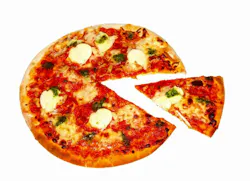
CEO for four months now, John Brase is developing a roadmap to return Conagra Brands to success, and that apparently means a smaller Conagra. Discontinuing the Celeste frozen pizza line is just the start of an SKU rationalization meant to focus the company on the products and categories that can deliver success.
Last week the company reported its first quarter financial results. In what Brase called “a solid start to the fiscal year,” sales dropped 1.4% (to $2.6 billion), but earnings per share increased 5.9%. Overall, the CEO affirmed guidance for the full year of sales declining 1-3% but earnings per share staying at $1.40-1.50.
Those numbers were impacted by a 1% benefit from price/mix company-wide but a 2.1% volume decrease.
“After spending the quarter working closely with our teams and engaging across the organization, I’m even more confident that we’re focused on the right opportunities and taking the right actions,” Brase said.
Brase became CEO on June 1, taking over for Sean Connolly, who had been the top exec for more than 10 years.
“On simplification, we’ve taken several concrete actions. We streamlined our leadership structure to establish clearer ownership, reduce layers, and accelerate decision-making. We’ve also launched a comprehensive review of our SKU portfolio. We’re making bold decisions now to focus our resources on our strongest opportunities and reduce complexity across manufacturing and procurement.”
Terminating Celeste frozen pizzas “allows us to redirect our resources toward brands and categories where we have greater scale and stronger growth potential… The benefits will build over time, with a majority expected to be realized over the next 12 to 18 months.
“We’re also advancing strategic options for certain non-core businesses,” Brase continued. I’m not going to get ahead of that process or speculate about individual brands. But we are taking an aggressive look at where we have the strongest right to win, where our resources can generate the best returns, and whether we are the best owners of every business in our portfolio.”
Among the company’s reporting segments, sales decreases were recorded in Refrigerated & Frozen, Grocery & Snacks and International. The small Foodservice business saw a 3.2% increase.
Within frozen, sales declined 0.7% and volume dipped 0.5%. Birds Eye vegetables and Healthy Choice single-serve meals delivered particularly strong results, growing 7% and 8% respectively. But the CEO noted softness in Marie Callender’s and P.F. Chang’s.
Meat snacks delivered growth. And “Popcorn remained pressured by broader category softness,” Brase said. “We continue to believe strongly in the category’s long-term potential, as we have leading brands, broad consumer appeal, and attractive consumption occasions.
Within grocery staples “We saw growth in tomatoes, chili and pickles, which was more than offset by declines in whipped toppings and salad dressings. We’ll continue managing these businesses with discipline and a focus on cash generation, while ensuring they provide strong value for consumers.
“Taken together, these results highlight both the strength of our portfolio and the opportunity in front of us,” Brase concluded. “We have brands consumers know and trust; our job is to support them with the right investment, innovation, value, and execution.”
About the Author
Dave Fusaro
Editor in Chief
Dave Fusaro has served as editor in chief of Food Processing magazine since 2003. Dave has 30 years experience in food & beverage industry journalism and has won several national ASBPE writing awards for his Food Processing stories. Dave has been interviewed on CNN, quoted in national newspapers and he authored a 200-page market research report on the milk industry. Formerly an award-winning newspaper reporter who specialized in business writing, he holds a BA in journalism from Marquette University. Prior to joining Food Processing, Dave was Editor-In-Chief of Dairy Foods and was Managing Editor of Prepared Foods.