Energy, Emissions, Regenerative Ag Drive Sustainability
Key Takeaways
- Sustainability remains a priority for food and beverage processors regardless of shifting political or public sentiment.
- Reducing greenhouse gas emissions across operations and supply chains has been a major focus recently for numerous processors.
- Processors continue to find opportunities to reduce energy and water use, minimize waste and improve operational efficiency while building long-term business value.

It’s starting to sound like a broken record, but food & beverage companies continue to make it clear that sustainability initiatives remain important to processors across the board, no matter which way the government and/or popular opinion slants. Simply put, being a good corporate citizen and taking care of the environment are still a priority, even for companies who appear to have taken a step back on some programs in the past year.
Take global protein behemoth JBS, for example. In July, much ado was made about the Brazilian company abandoning its goal to be net-zero on greenhouse gas (GHG) emissions by 2040. A setback for friends of the environment, certainly, but reading more deeply, JBS did not give up on reducing its GHG emissions outright. It simply shifted its strategy, concentrating on cutting Scope 1 and Scope 2 emissions, and less so on supply chain-centric Scope 3 emissions.
And that’s the underlying message: It’s wonderful to shoot for the stars with sustainability goals, but for the larger companies in the industry, making even moderate changes can make a big difference.
“In large part, sustainability projects help the bottom line too: There's an ecosystem reason to be sustainable, but there's also a financial reason as well,” explains Ben Hildebrand, director of Environmental Sustainability at Perdue Farms, whose Lewiston, N.C., plant won Food Processing’s 2026 Green Plant of the Year award. “Being wasteful in either way is not prudent.”
JBS is not alone in its examination of GHG impacts. In fact, GHG emission reduction could be called a bit of a hot topic among companies who want to limit their carbon footprint. Hildebrand says Perdue has dug deeply into measuring its GHG emissions to determine how it can reduce those, including those up and down the supply chain (Scope 3).
“A large percentage of those Scope 3 emissions come from our grain-farming operations,” he adds. “As a result of that, we’ve worked with our grain team to understand and help influence and incentivize our farmers to do more conservation practices on farm.”
As farmers adopt strategies such as “no-till farming” or using cover crops more, or even reducing the use of nitrogen on their fields, the impact on the feed grain, and therefore the chicken and oil products that Perdue produces, is lessened. The company’s vertical integration and status as family-owned helps get even some of the more complex sustainability issues executed.
“As a family owned company, we can take the long view,” Hildebrand says. “We have the ability to think about where we're going to be in 25 years, rather than six months, and that puts a different lens on how we view these things.”
Sampling the sustainability smorgasbord
Processors of all types and sizes continue to find and execute initiatives that not only help the planet and the communities around their facilities, but also contribute to the bottom line in many cases.
In August 2026, PepsiCo, the biggest company in our annual Top 100 Processors report for 2026, updated its progress toward various environmental, social and governance (ESG) goals as part of its “Pepsi Positive” (referred to by the company as pep+) transformation, a “strategic end-to-end transformation that puts sustainability and human capital at the center of how we aim to create value and growth by operating within planetary boundaries and inspiring positive change for planet and people.”
On the climate side of the ledger, PepsiCo reported a 24% reduction toward Scope 1 and 2 goals (2025 numbers, compared to the company’s 2022 baseline), 12% drop for Scope 3 Energy and Industry, and 18% reduction for Scope 3 Forest, Land and Agriculture (FLAG). PepsiCo said it collaborates with a fertilizer company in the European Union and the U.K. to help some 1,000 farmers adopt low-carbon fertilizers and precision farming technologies to reduce emissions, focused mostly on potato farmers there.
“We're excited by the momentum we're building as pep+ continues to transform our business end to end," Jim Andrew, PepsiCo chief sustainability officer, said in the release. "We're making significant progress … and we're doing it in ways that we believe will strengthen our business for the long term.”
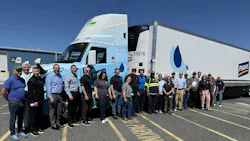
PepsiCo also integrated more than 1,000 electric delivery vans into its fleet in Mexico — something other processors have worked on and accomplished. Perdue deployed six trucks powered by 100% biodiesel (B100) to transport fresh chicken in May 2026, and this editor has seen another poultry processor, Koch Foods, using zero-emission, electric tractor trailers transporting goods between two of its Chicagoland plants (even though no known news release exists detailing their implementation).
In September, cheese processor Sargento released its 2025 Real Impact Report, in which it celebrated having saved 12.2 million gallons of water across its production facilities and diverted 91.4% of waste generated from our facilities from landfill through ongoing waste-reduction efforts.
Additionally in September, the U.S. Poultry & Egg Assn. (USPoultry) doled out its 2026 Clean Water Awards, with Darling Ingredients Inc. winning in the pretreatment category for its poultry rendering facility in Fayetteville, N.C., and Pilgrim’s Pride receiving the honor in the full treatment category for its small bird debone processing facility in Mayfield, Ky.
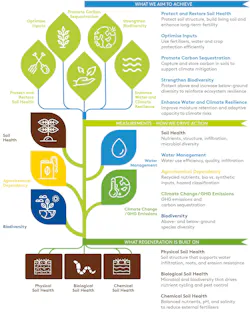
Produce companies aren’t immune either, with many looking to advance sustainable agriculture practices in the last year. Global tropical fruit company Fyffes, for example, announced what it called “an ambitious roadmap to integrate regenerative agriculture practices” by 2030 over 13,000 hectares of banana and pineapple farms in its network. Fyffes imports bananas and pineapples into Europe and is a supplier in North America as well.
Sustainability weighs so heavily on the minds of many plant managers and engineers that equipment manufacturers have taken note and made adjustments.
Walk any industry trade show floor and see the various OEMs touting the energy efficiency of their systems, for instance. Companies that produce facility systems (think lighting, piping, boiler room, etc.) most certainly position their solutions to help processors reduce impacts, and even sanitary design teams work to find the most efficient ways to properly clean machines, saving on water use.
About the Author
Andy Hanacek
Senior Editor
Andy Hanacek has covered meat, poultry, bakery and snack foods as a B2B editor for nearly 20 years, and has toured hundreds of processing plants and food companies, sharing stories of innovation and technological advancement throughout the food supply chain. In 2018, he won a Folio:Eddie Award for his unique "From the Editor's Desk" video blogs, and he has brought home additional awards from Folio and ASBPE over the years. In addition, Hanacek led the Meat Industry Hall of Fame for several years and was vice president of communications for We R Food Safety, a food safety software and consulting company.