Dairy Processors Push to Keep Up with Demand
Key Takeaways
- Dairy is benefiting from a renewed consumer interest in real, nutritious foods, with growing demand for whole milk, high-protein products, ultra-filtered milk and other dairy-based innovations.
- Processors are making significant investments in production capacity, with major expansions, new facilities and modernization projects underway to keep pace with rising demand across multiple dairy categories.
- The dairy industry's growth outlook remains strong, with more than $15 billion in investments through 2030.
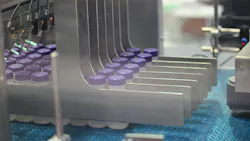
Dairy products are hot, and the industry is responding by increasing capacity and developing new products to meet the growing consumer demand for dairy and dairy-based items. The category has momentum, and it’s being pushed along by consumers who are interested in the composition of their foods. However, says Heather Anfang, Land O’Lakes executive vice president and president of the Dairy Foods division, digging into ingredients and their roles goes much deeper into health outcomes today than maybe in the past.
“It feels like we're having a real different conversation around health and nutrition and wellness in our country right now, and dairy has always been a terrific, nutritious, healthy product for people,” she says. “I think they're either learning or re-learning that, and it's coming into the spotlight for many.”
Dairy has benefitted from the deep dives consumers take on finding healthful, nutritious foods that give them simple benefits. Indeed, rise in interest in dairy drives back to basics for many consumers, to the benefit of milk, says Al Dejewski, senior vice president of marketing for the Milk Processor Education Program (MilkPEP).
“We are seeing consumer preferences shift back toward real, simple foods, and dairy is benefiting directly from that momentum,” he explains. “One of the clearest signs of the shift toward real foods is the resurgence of whole milk; as perceptions of dairy fat continue to evolve, whole milk sales are growing.”
Dejewski mentions an interesting trend materializing among milk buyers, who are looking for versatility and moving away from a one-size-fits-all approach. He highlights Circana data showing that nearly half of white milk buyers purchase two or more fat types, and those households account for about 60% of white milk volume.
“Whole milk leads for cooking and baking, while 2% is the everyday go-to,” he says. “That flexibility is part of milk’s appeal: it works across occasions and budgets.”
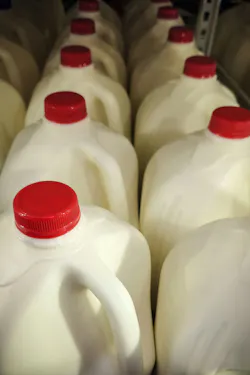
Pushing production
With that surging demand, processors need to ramp up production, and they’ve been responding over the past few years, without a doubt. Spin the food & beverage company capital spending wheel, and one has a really good chance of landing on a few big-ticket products producing milk, cheese, butter, yogurt, ice cream and other dairy-derived products.
Ferrero Group’s Wells Enterprises opened the first two phases of its transformed and expanded ice cream plant in Dunkirk, N.Y., in August — when all four phases are complete, the plant will be capable of producing five times more product annually than before.
For dairy producers in New York, August was a busy month, as Coca-Cola subsidiary Fairlife also cut the ribbon on a new facility in Webster, N.Y., that is expected to process between 5 million and 6 million pounds of milk per day once fully operational. Fairlife also broke ground on a $650 million expansion in Coopersville, Mich., in August. Fairlife’s moves appear to be perfectly timed to market conditions, at least according to data relayed by Dejewski from Circana.
“What we can see from the retail side is innovation reaching the shelf,” he says. “Ultra-filtered lactose-free milk, which offers more protein than regular milk and no lactose, is one example. According to Circana, it has grown more than 20% over the 13 weeks ending in early September.”
Other completed projects include Hiland Dairy opening a 96,000-sq.-ft. expansion of its Tyler, Texas, facility. Then, a month or so after that, Good Culture and Michigan Milk Producers Assn. (MMPA) cut the ribbon on a production facility in Remus, Mich., dedicated to manufacturing cottage cheese.
And those are just the big-ticket facilities that were completed over the past six months or so. Moving to planned dairy capital spending, it’s easy to see companies stepping up even further to satisfy consumer demand.
Riding the wave
In fact, the future appears to be quite bright when it comes to the growth of dairy operations across the U.S. In late October 2026, the International Dairy Foods Assn. announced that the dairy manufacturing sector was projected to outpace the broader manufacturing sector in both employment and output growth over the next decade.
IDFA noted in the release that “America’s dairy processors are investing more than $15 billion in new and expanded manufacturing capacity across 23 states, with more than 85 projects planned or underway through 2030.”
Possibly the biggest headline-maker in recent times when it comes to turning the crank on dairy-focused capital spending, however, is our 2026 Processor of the Year, Chobani (our upcoming November cover story). The New York-based processor of Greek yogurt and coffee creamers stands out significantly because of its gargantuan investments in expanding facilities and building new ones.
By our rough count, the maker of Greek yogurt and coffee creamers (and other products), has committed somewhere between $3.5 billion and $4 billion to projects in Twin Falls, Idaho; Rome, N.Y.; Allentown, Pa.; and a coffee-creamer facility in Norton Shores, Mich.
Land O’Lakes has also kept its eyes on expansion, and recently announced an expansion that looks to capitalize on the growing popularity of ultra-filtered milk. In July 2026 the company announced it would expand its high-value dairy-protein production capabilities at its Tulare, Calif., plant. The investment would enable production of ultra-filtered milk, adding value to the milk its cooperative member farmers provide.
“This is about more than a single upgrade. It’s about building the future of dairy,” Anfang said in the release at the time. During a recent interview with Food Processing for an upcoming “Food For Thought” podcast episode, she said the facility expansion was under way, and that the first phase was expected to open in the first quarter of 2027.
Anfang says across Land O’Lakes’ 11 processing facilities, there are a wide variety of opportunities to advance operations, and the company feels privileged to have the farmer owners behind them. Whether it’s additional automation or robotics to account for the challenges of recruiting and retaining workers or maintaining facilities, lines and equipment, the company always has some innovation to consider. With dairy in a prime position to continue the positive momentum, expect processors to continue to have options in front of them.
“It's really looking at how we leverage new technology to meet the needs of the customers and consumers in the most efficient way,” Anfang says, “and there's just tons of opportunity for that right now.”
About the Author
Andy Hanacek
Senior Editor
Andy Hanacek has covered meat, poultry, bakery and snack foods as a B2B editor for nearly 20 years, and has toured hundreds of processing plants and food companies, sharing stories of innovation and technological advancement throughout the food supply chain. In 2018, he won a Folio:Eddie Award for his unique "From the Editor's Desk" video blogs, and he has brought home additional awards from Folio and ASBPE over the years. In addition, Hanacek led the Meat Industry Hall of Fame for several years and was vice president of communications for We R Food Safety, a food safety software and consulting company.